 Home
HomeFluidization in a spout bed
This case simulates a pseudo-two-dimensional spout bed corresponding to the simulations reported in Goniva et al. and compares results with measurements from different experimental campaigns.
Note
This case is located in CFDEMcoupling/validationCases/spoutBed_Goniva2012.
The case setup is identical to Goniva et al.. The case runs for two
seconds and averages the particle velocity for  . The average
particle velocity is compared to the reference results indicated in
Goniva et al..
. The average
particle velocity is compared to the reference results indicated in
Goniva et al..
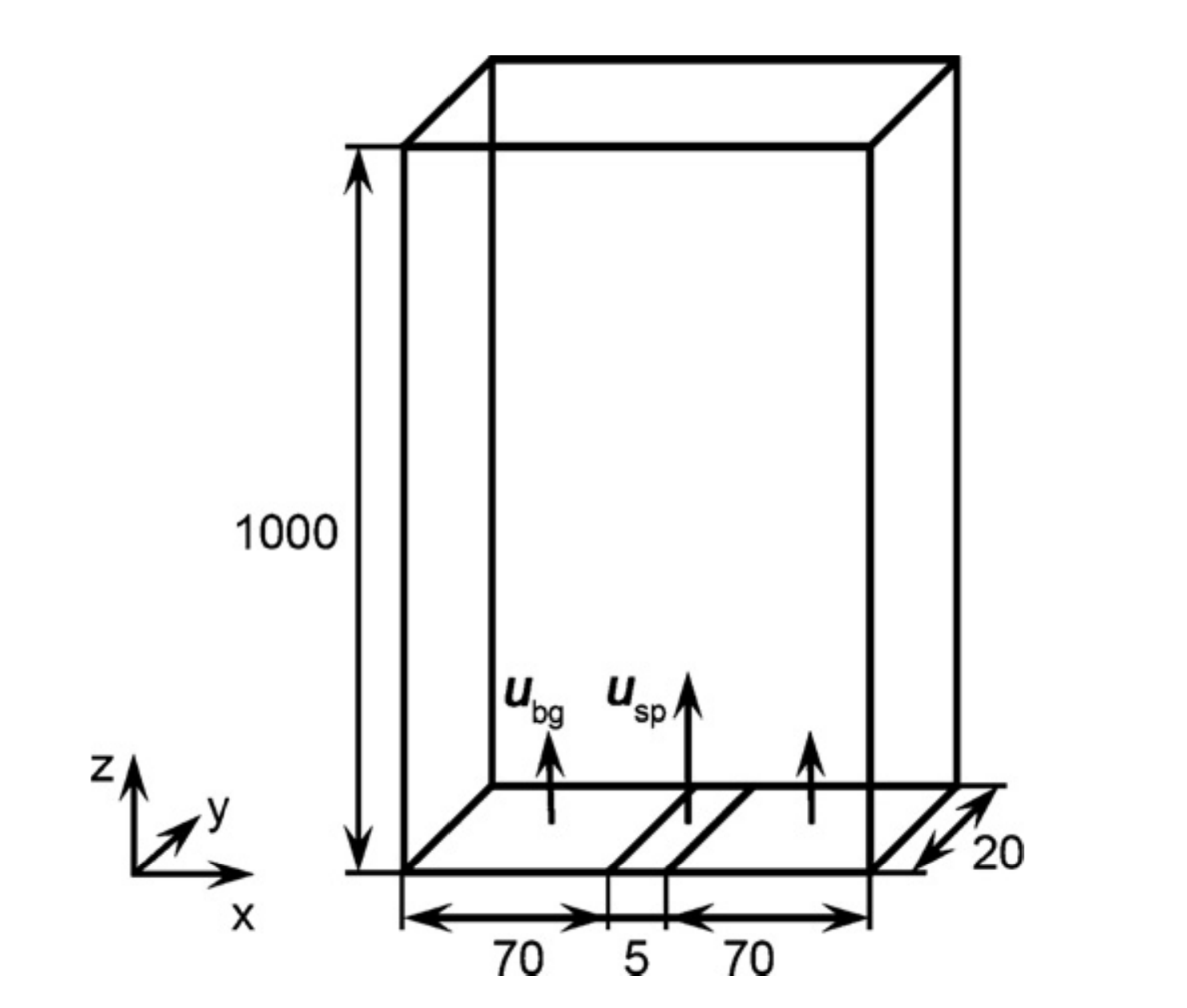
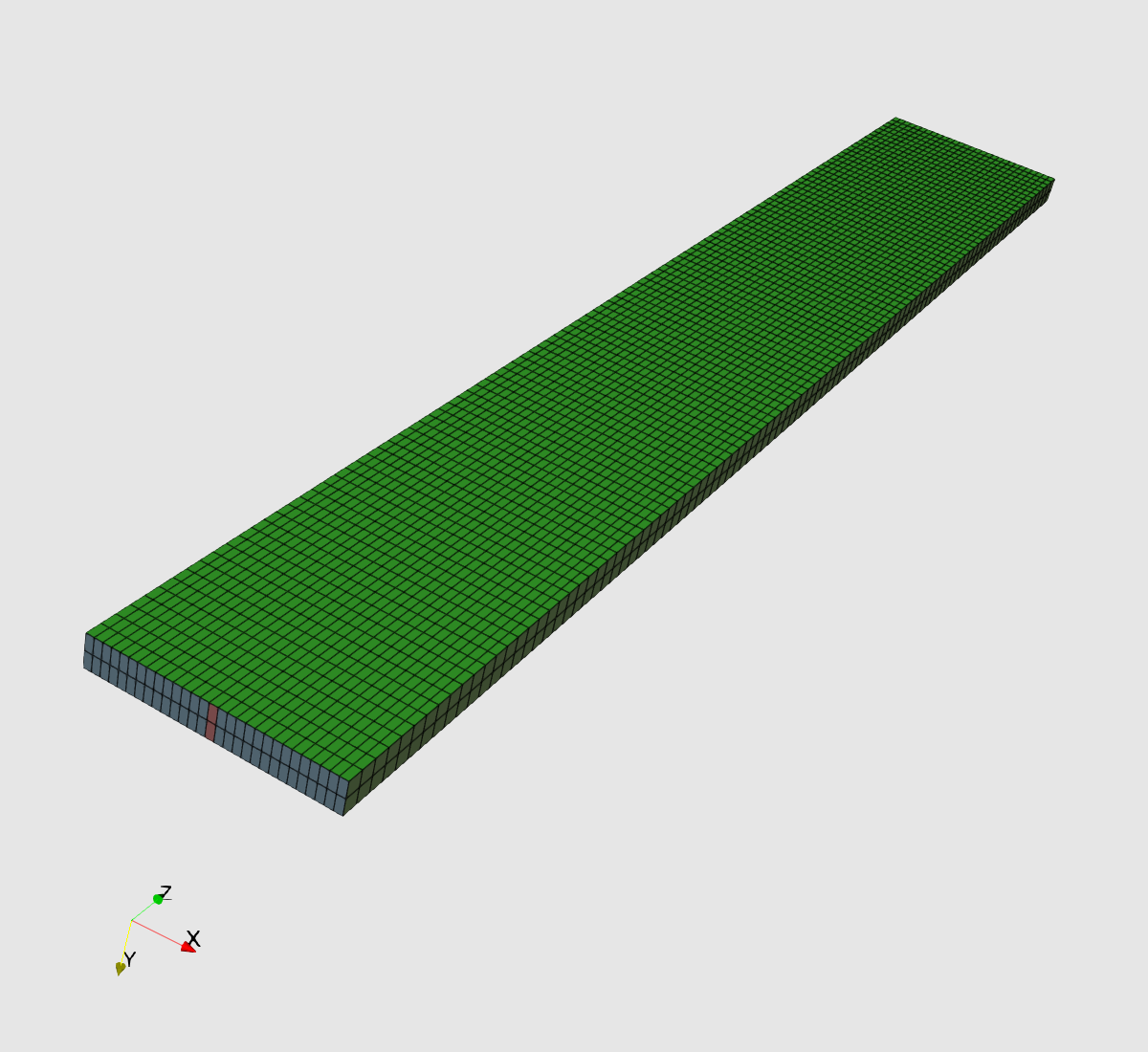
Figure 1: Sketch of the configuration wth dimensions in mm (left) and the CFD mesh (right).
Models used
Particle forces:
The drag force is computed by the Koch-Hill drag model.
Alteration of effective gravity forces due to the difference of fluid and particle densities is modelled by the Archimedes force model.
Particles are mapped to CFD by the engine locateModel.
The voidfraction is computed by the divided voidfraction model.
Momentum exchange between particles and fluid is computed in an implicit manner, see Zhou et al. (2010), JFM.
The equation system is solved using cfdemSolverPiso.
Results
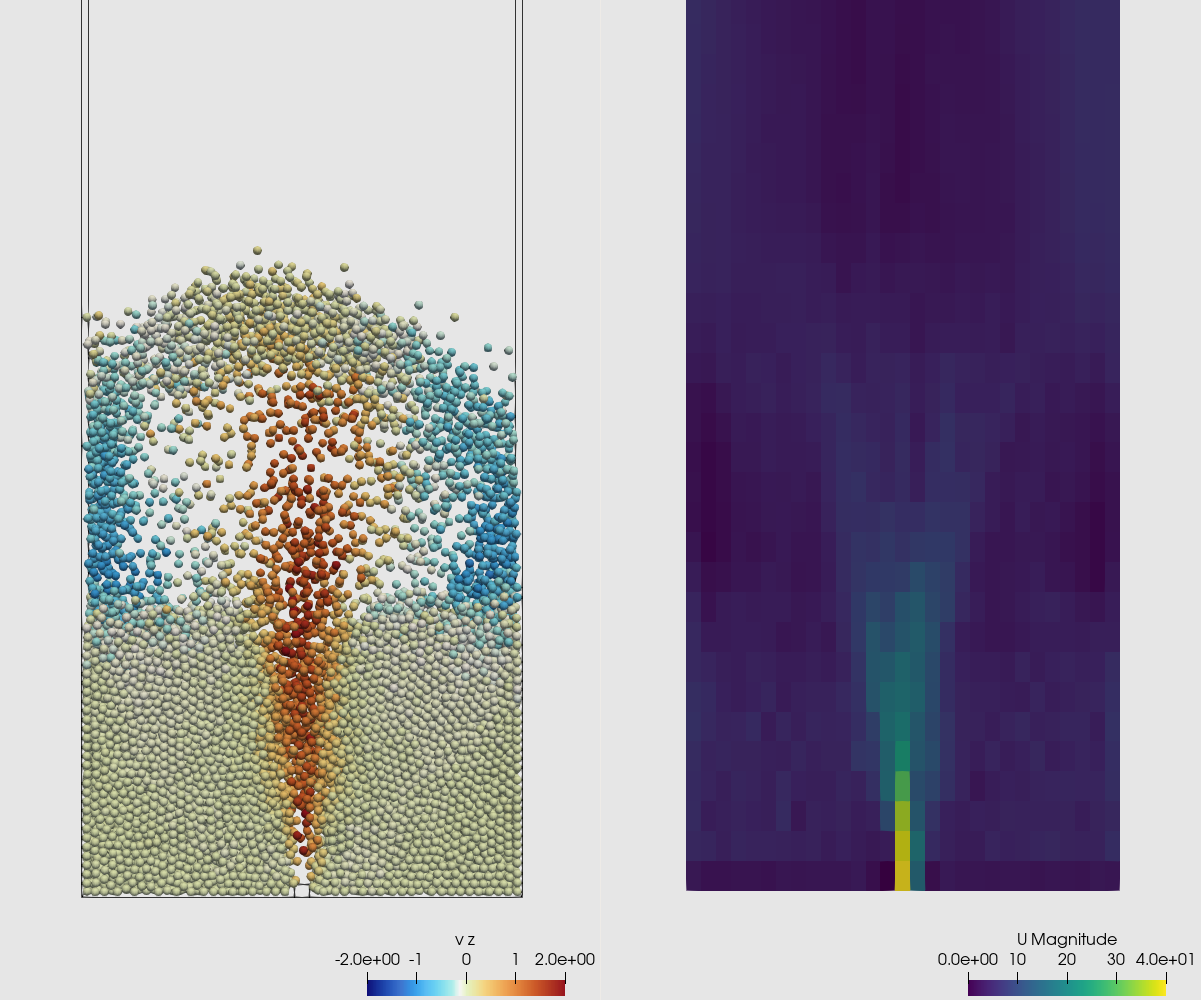
Figure 2: Snapshot of vertical particle velocity (left) and fluid velocity magnitude (right) at the end of the simulation.
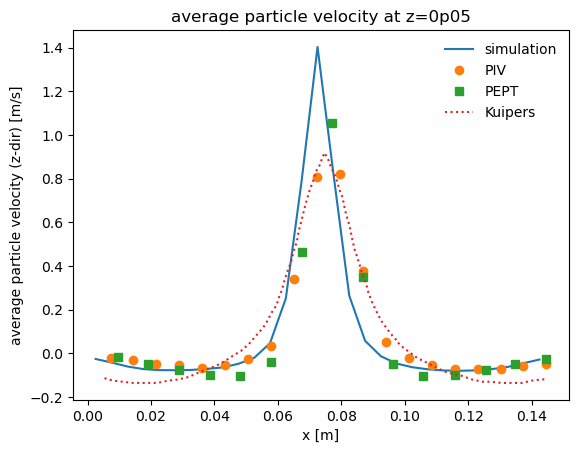
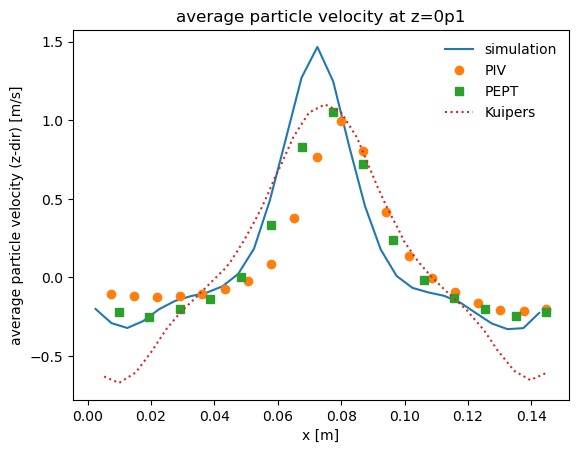
Figure 3: Average particle velocity at z = 0.05 (left) and z = 0.1 (right). Very good agreement with the measurements is found. Differences to the simulations by Kuipers can be attributed to the fact that those simulations did not include a rolling friction model.
Literature
[1] C. Goniva, et al. Influence of rolling friction on single spout fluidized bed simulation. Particuology 15 (2012): 582-591.