 Home
HomeSettling of a resolved particle
Warning
Some variants of this case are included in and rely on functionality that is available in the CFDEMcoupling-Premium package.
This case simulates the settling of a particle. The simulation is run in the resolved mode using the implementation of the Immersed Boundary Method (IBM) available in CFDEM®coupling. Variants using cfdemSolverIB and cfdemSolverPimple are available. Reference data from experimental measurements of a rigid sphere settling in a viscous medium are available, see Pianet et al.. A sketch of the experimental setup is shown in Figure 1 and further information can be found in the publication from Pianet et al.. Different Reynolds numbers are achieved by using different silicon oils as fluid phase.
Note
This case is located in CFDEMcoupling/validationCases/settlingTest_resolved_Pianet2007.
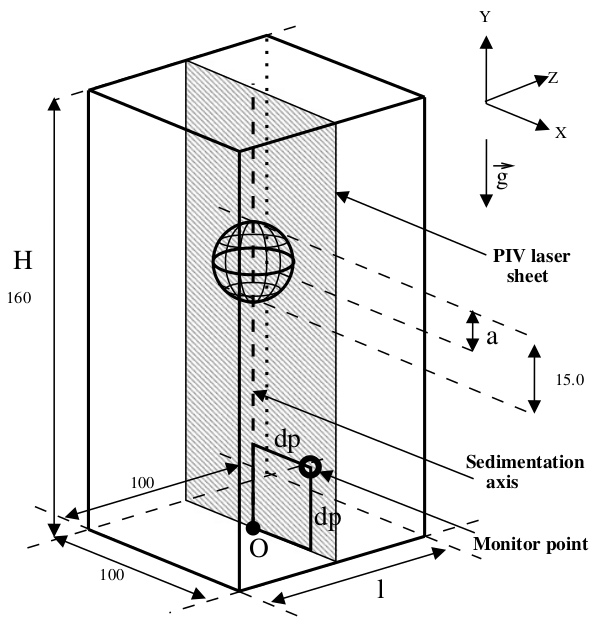
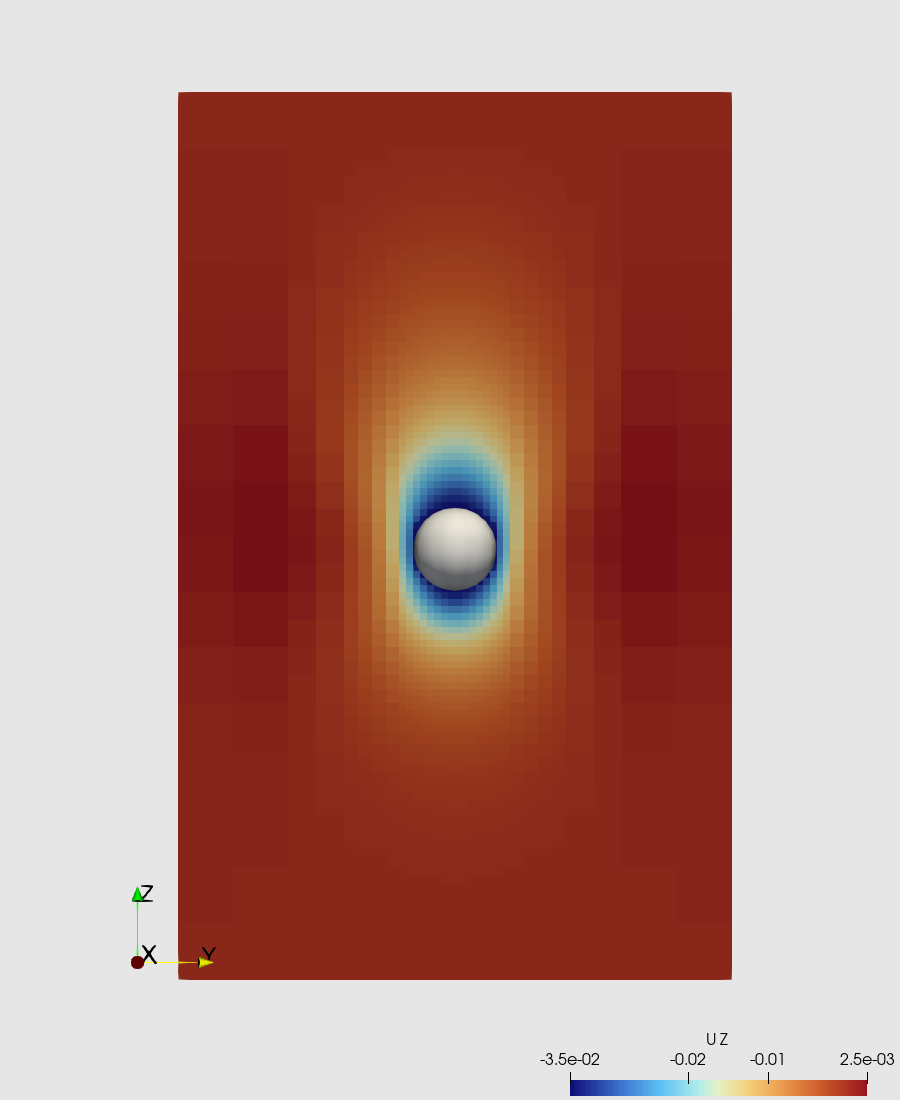
Figure 1: Sketch of the experimental setup (left) and vertical fluid velocity
obtained from the CFDEM®coupling simulation for a particle Reynolds number equal to
1.5 (right). The video of the simulation for  can be found here.
Models used
Particle forces:
The drag force is computed by the Shirgaonkar model.
Alteration of effective gravity forces due to the difference of fluid and particle densities is modelled by the IB variant of the Archimedes force model.
Particles are mapped to CFD cells by a variant of the engineIB locateModel specifically tailored towards resolved CFD-DEM simulations.
The voidfraction is computed by the IB voidfraction model accounting for large particles.
For cases using cfdemSolverIB no further models are required. When using cfdemSolverPimple, the resolved particle representation is included by the IBParticle used in addition.
Results
The quantity used for comparing the experimental and the simulation results is the particle falling velocity; see Figure 2. As can be seen, the correspondence between experimental and numerical results is very good for the different Reynolds numbers reported by the authors.
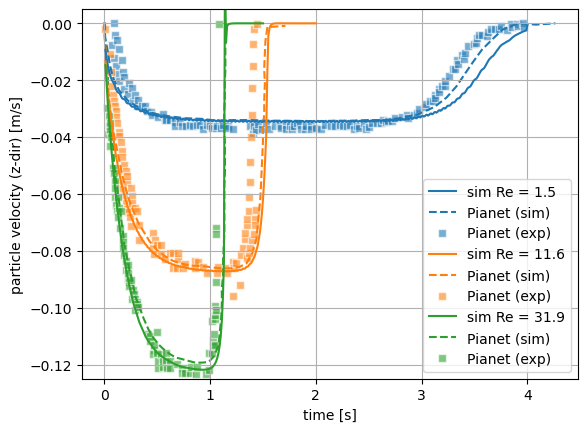
Figure 2: Experimental and numerical velocity of the falling particle
for different Reynolds numbers. In the current setup the particle collides with the
bottom wall at the end of the simulation. For  the rebound
results in a notable positive particle velocity. Moreover, please note that the
experimental results from Pianet et al. comprise two experimental
campaigns.
the rebound
results in a notable positive particle velocity. Moreover, please note that the
experimental results from Pianet et al. comprise two experimental
campaigns.
Literature
[1] G. Pianet, et al. Assessment of the 1-fluid method for DNS of particulate flows: Sedimentation of a single sphere at moderate to high Reynolds numbers. Computers & fluids 36.2 (2007): 359-375.